
As readers of this blog have read before, the saga of what happened to Lt. Governor Sylvia Luke was broken up into three “phases”. You can read about Phase I here and Phase II here.
PC: Sodacan (With elements from File:Hawaii-StateSeal.svg, uploaded by: Clindberg), Public domain, via Wikimedia Commons
If Phase I marked the emergence of the story, and Phase II was the period when the noise faded, but the questions remained, Phase III is where those questions began producing consequences.
The hallmark of Phase III can be summed up in one word: change.
With Governor Green recently announcing that he will resume his ability to travel out of state, and with a new authority structure now in place, with Acting Lt. Governor Keith Regan given the job of overseeing day-to-day operations, Phase III of this part of the saga has come to an end.
Because any savvy political watcher will know that this all started with a disclosure, and then an adjustment that grounded the governor in Hawaiʻi – something that is now pau.
But along with the resumption of travel, one only needs to scratch beneath the surface of this saga to find other things that changed—some of them radically altering Hawaiʻi’s political landscape.
The first unexpected shift came with Sylvia Luke doing two things, one week apart. First, she withdrew from her re-election campaign for Lt. Governor. Then, the following week, she took a voluntary leave of absence from her elected office. As she said in her announcement, she was doing this to deal with the aftereffects of receiving a target letter from the Attorney General the week before.
The target letter changed the trajectory of one politician. The events that followed changed the trajectory of Hawaiʻi politics.
This immediately raised questions about who would serve as acting Lieutenant Governor. For about a week, the speculation had all the hallmarks of palace intrigue before Governor Green ultimately landed on State Comptroller Keith Regan to fill the position.
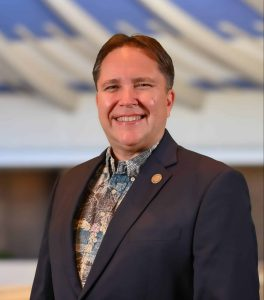
PC: State of Hawaii Dept. of Accounting and General Services https://ags.hawaii.gov/wp-content/uploads/2025/04/Keith-Regan-2.jpg
With Regan’s arrival, things did quiet down – at least for the saga as it affected the office itself. But in other circles, things were stirring up.
While the early stages of Phase III were unfolding, there were already people boarding planes to Kauaʻi to talk with Mayor Derek Kawakami. Long viewed by many in Hawaiʻi political circles as someone destined for higher office once his time as mayor concluded, it did not take long for him to jump into the Lt. Governor’s race. His arrival came with an immediate splash, aided by For A Better Tomorrow, the Super PAC backed by Pacific Resource Partnership.
His entry also appeared to receive a warm reception from Governor Josh Green. Observers pointed to the easy interaction between the two at Mayor Rick Blangiardi’s State of the City address as an early sign that Hawaiʻi’s political landscape was already beginning to reorganize itself.
But that didn’t mean the Lt. Governor’s race – with Luke out and Kawakami in – meant that the race would not see other new faces join.
Enter current State Representative Della Au Belatti, who at the time announced she was stepping down, not running again for her seat, to run for Congress in a challenge to current Congressman Ed Case for the Democratic nomination. With that race already looking like a challenge – with another challenger to Case in Senator Jarrett Keohokalole coming on strong – this blogger started to hear in his circles that Belatti might make a jump to another race.

PC: ThinkTech Hawaii, CC BY 3.0 https://creativecommons.org/licenses/by/3.0, via Wikimedia Commons
And, lo and behold, with about a week before the filing deadline, Belatti announced that she would jump into the Lt. Governor’s race. As for why…. her reasoning goes all the way back to the genesis of this saga of Sylvia Luke, in which she said, with the clearest hindsight possible, “In the last month, there has been a fundamental change in the political landscape.”
She then cited the issues with Luke as one reason for the switch. At the same time, her supporters say she intends to carry forward many of the issues and priorities that Luke championed.
So, to this blogger’s eye, what has happened is that the Lt. Governor’s race is all new, with new faces, and while both big-name candidates are there as “clean government” candidates, at least one who will pick up the flag that Luke dropped and continue her work.
Now that’s an interesting angle, and should make that race very interesting to watch.
The changes, at the end of Phase III, came in waves.
The first change, of course, came from the revelation by Luke about the potential payoff.
The second change came with the reaction to the news, and how specific players, from the Governor to the leaders of the Legislature to other political pundits, handled the news and changed operations due to it.
The third change came from the obliteration of political assumptions and the introduction of new players that no one had on their bingo card just one year ago. The political assumption was that Luke would be a shoo-in for Governor in 2030, with those who were supporters of her waiting in the wings to work and serve under her at the executive level.
And, of course, the introduction of new faces at the statewide level – Kawakami and Belatti.
But another change occurred, which is a fundamental change in the way the Governor sees his role vis-à-vis travelling outside of the state. Until the Luke saga, no one would have thought twice about the Governor going to the Continent to attend a conference, or meeting in Washington DC, or even to fundraise.
Now, and into the future, the role of the Lt. Governor will forever be tied to the question many had during this time: “Can the Governor trust their LG?” Or more pertinent to the voter who will choose the next one, “who would I trust to run this state?”
The answer to that question will be made clearer in August, and definitively in November, as the “Luke Saga”, exiting Phase III now, will go into new phases as the investigation continues.