
In over 30 years of watching Hawaiʻi electoral politics by this blogger, one thing has become increasingly apparent: sometimes the election doesn’t end when the votes are counted.
Few political rivalries demonstrate that better than Trevor Ozawa and Tommy Waters.
For over 12 years, the two have fought three election battles that ended up before the Hawaiʻi Supreme Court.
In political terms, it has become something of our own Ali-Frazier trilogy. And with the third “bout” just concluding at the Hawaiʻi Supreme Court, it seems like a good time to look back at how we got here.
And just for fun, let’s portray it as bouts…keeping with the boxing analogy.
Bout I: 2014 — 41 votes
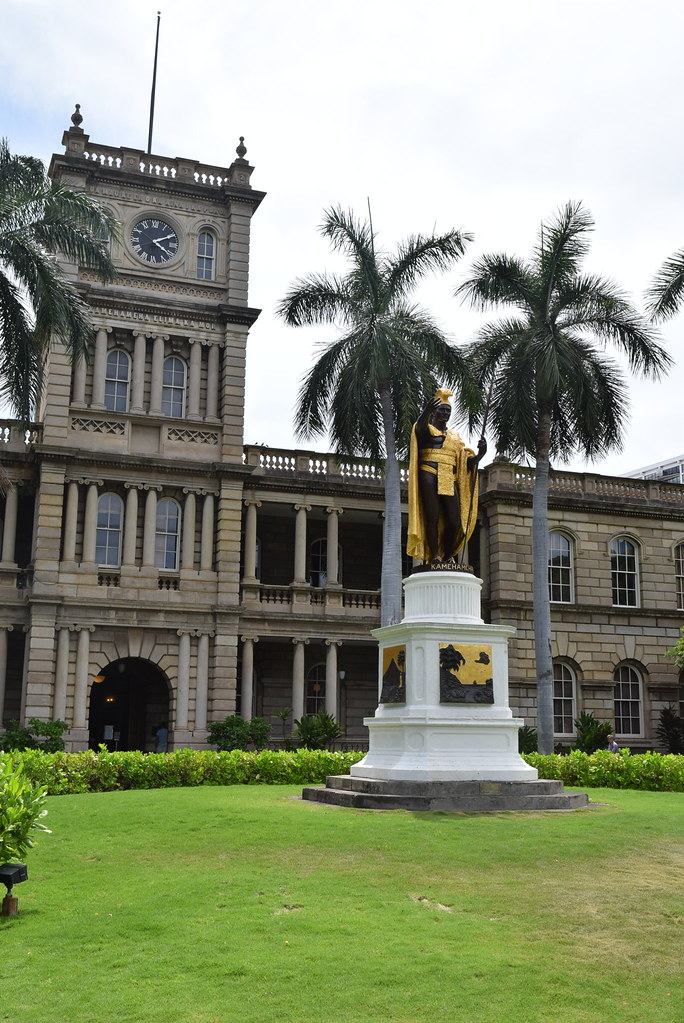
PC: “Hawaii Supreme Court, behind King Kamehameha – Downtown Hawaii” by Haydn Blackey is licensed under CC BY-SA 2.0.
The first bout between Trevor Ozawa and Tommy Waters came in 2014, when the two faced off for the Honolulu City Council District IV seat.
And going into the general election, Waters appeared to have the advantage.
Waters finished first in the August primary with 10,110 votes, or 32.8 percent. Ozawa came in second with 8,012 votes, or 26 percent. Neither received the majority needed to win outright, sending both into the November general election.
If this were boxing, Waters won the opening round.
But November would be a different fight.
The race was close — although, in hindsight, not nearly as close as their next one would be. Waters led through much of election night, but when the final returns came in, Ozawa had pulled ahead.
After the votes were audited and reconciled, the final count stood at:
Trevor Ozawa — 16,374.
Tommy Waters — 16,333.
Forty-one votes.
More than 32,000 people had voted for the two candidates, and just 41 votes separated the winner from the loser.
Waters, however, wasn’t ready to hear the final bell. On November 24, he took the fight to the Hawaiʻi Supreme Court, challenging the election results and pointing to discrepancies in the vote count.
Among the issues raised were 11 overages and 39 underages in election records, along with questions about ballots recorded as blank. Waters argued that 74 of those blank ballots may actually have contained valid votes for either candidate.
In a race decided by only 41 votes, 74 ballots mattered. Waters wanted the blank ballots manually reviewed. If the actual winner could not be determined from that examination, he wanted a new election.
Ozawa argued that the election system had done its job. The votes had been checked, the auditing process had been completed, and the result should stand.
Then, on Christmas Eve, the decision came down. The Hawaiʻi Supreme Court ruled that Waters had not provided sufficient evidence of errors or irregularities that could change the outcome of the election. Therefore, the 41-vote victory stood. Trevor Ozawa took the District 4 seat.
And bout I went to Ozawa.
Bout II: 2018–19 — The Rematch
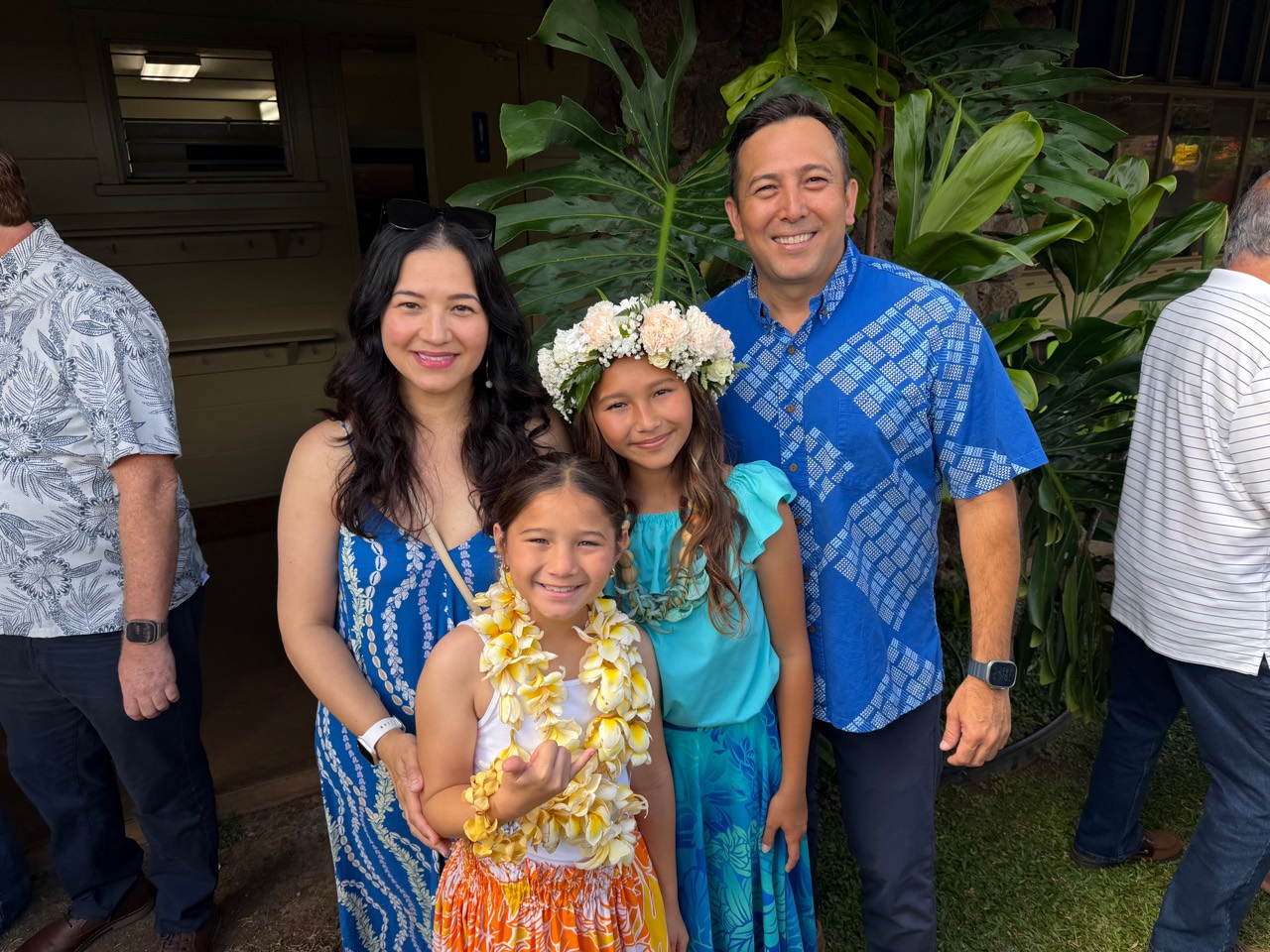
PC: https://www.trevorozawa.com/photos/family-landscape.jpg
Ozawa was again declared the winner, receiving 18,358 votes to Waters’ 18,336. This time, the difference was only 22 votes, compared to 41 votes separating them in 2014.
Four years later, Tommy Waters and Trevor Ozawa were back at it again. Same two candidates. Same City Council District 4 seat. And somehow, an even closer result.
And just like 2014, Waters went to court. This time, however, he had a much stronger case.
The issue centered on 350 absentee ballots picked up from the Honolulu Airport post office after the 6 p.m. deadline on Election Day. The ballots were picked up in two batches, one around 6:30 p.m. and another around 7:30 p.m.
They were then mixed in and counted with the other ballots. That created a pretty obvious problem — 350 ballots that arrived after the deadline had been counted in an election decided by only 22 votes. Worse, once those ballots were mixed with the other ballots, there was no way to separate them and figure out who actually won.
On January 25, 2019, the Hawaiʻi Supreme Court invalidated the election. For the second time, Waters had taken his fight with Ozawa to the Hawaiʻi Supreme Court. Unlike 2014, this time he won.
But that didn’t make Waters the new councilmember. The court couldn’t determine who actually won the election, so District 4 voters had to go back and vote again.
And in a rarity in electoral politics overall, even more so in Hawaiʻi, the rematch needed a rematch.
So on April 13, 2019, voters went back to the polls for a special election between Ozawa and Waters. This time there was no 41-vote margin. There was no 22-vote margin. And there was no court challenge needed to figure out who won. Waters received 51.4 percent of the vote to Ozawa’s 48.5 percent.
Tommy Waters finally beat Trevor Ozawa. And bout II went to Waters.
After two rounds of this political fight, the score was even. Ozawa 1. Waters 1. For the next several years, it looked like that might be where the story ended.
It wasn’t.
Bout III: 2026 — The Final Round?

PC: Honolulu City Council web image at https://www.honolulucitycouncil.org/d4-blog/july-2025-message-from-cm-tommy-waters
After the second bout, most observers probably thought the Ozawa-Waters fights were over. After all, seven years would pass before the two would face each other again.
During those seven years, Waters would easily win reelection, rise to become Council Chair, and even generate some talk in political circles — which this blogger heard more than once — about a possible run for Mayor in 2028.
But Waters also attracted his share of controversy, from allowing a 64% Council pay raise to go forward to a Council leadership reorganization following his 5-4 loss on a sewer-fee vote that immediately raised questions about political retaliation.
So by the time the 2026 election came around, another question was hanging over Waters: Could he even run again?
After Waters filed to run, Christian Butt, a friend and former law school classmate of Waters, submitted a question about his eligibility to the Honolulu City Clerk. Acting City Clerk Chadd Kadota determined that Waters could run because his time in office began with the April 2019 special election and therefore did not amount to a full four-year term.
With the City Clerk declaring Waters eligible, it looked like he was going to run and would be difficult to beat.
Then, near the filing deadline, Ozawa reappeared.
There had been some movement to put forward a serious challenger to Waters, and Ozawa certainly fit that bill. But this time Ozawa wasn’t going to challenge Waters only at the ballot box. After the City Clerk responded to Ozawa’s challenge by saying that “no further action will be taken by this Office,” Ozawa went to court to ask whether Waters was actually eligible to run again.
His argument essentially came down to how the courts would define just one word:
Elected.
In July 2026, Circuit Court Judge James Ashford agreed with Ozawa and ruled that Waters was not eligible to run for another term. By then, however, there was a problem. The election was already happening. Ballots had been mailed, people were voting, and Waters was still on the ballot while the court fight played out.
When the votes were counted, Ozawa finished first, and Waters finished second. Normally, that would have meant both were headed to the general election. Except Waters had already been ruled ineligible.
And so, for the third time in their political rivalry, Ozawa and Waters were headed back to the Hawaiʻi Supreme Court.
On August 28, the Hawaiʻi Supreme Court finally weighed in. And like just about everything else involving Ozawa and Waters, there was a twist. The court threw out the earlier Circuit Court decision against Waters, finding that Ozawa’s challenge should not have been decided that way.
But Waters still lost.
A separate challenge before the Supreme Court allowed the justices to answer the question that really mattered: Did Waters’ 2019 election count as his first term?
By a 3-2 vote, they said yes.
The majority essentially said that the April 2019 special election finished what the disputed 2018 election had started — deciding who was elected to the 2019–2023 term.
And once again, it came down to that one word: Elected.
Waters had been elected to the 2019–2023 term and then elected again to the 2023–2027 term. It didn’t matter that he hadn’t served all four years of the first one: Two elections, two consecutive terms. Waters had reached the term limit and could not legally run for what would have been a third term.
Two dissenting justices saw the 2019 election differently. To them, Waters came into a term already underway and served only what was left of it. They didn’t think that should count against Waters as one of his two allowed terms and believed that, given the uncertainty, the voters should have been allowed to decide.
With the Supreme Court ruling, at least for now, the final score stands at Ozawa 2, Waters 1.
Waters could still emerge as a candidate for Mayor in 2028, while Ozawa still has a general election ahead of him before he can reclaim his old Council seat. On paper, there doesn’t appear to be an obvious reason for these two to meet in the political ring again.
But anyone who has watched Hawaiʻi politics long enough knows better than to assume anything. After all, Ali and Frazier called it a day after three.
Who knows about Ozawa and Waters?