
The news of new advertisements promoting Derek Kawakami came through a text, “Heard a radio ad for Kawakami on the radio by the carpenters. They starting early. Was a good, positive ad.”
Kawakami had announced only a couple of weeks before that he was filing to run for the office of Lt. Governor, challenging incumbent Sylvia Luke. Curious about the timing, it didn’t take long to see the visual version of the message — broadcast during prime time news.
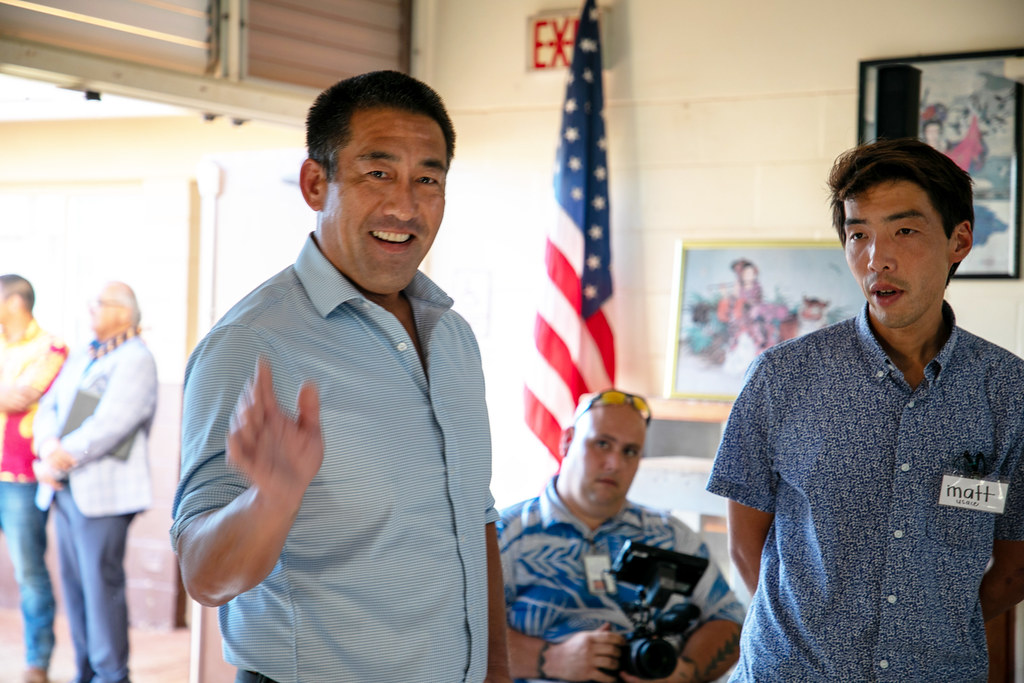
And the first thing this blogger identified is that the tone of the ads was very easy on the eyes, and pleasant to hear as the voiceover of the ad is all Kawakami, speaking at a state of the county address in Kauaʻi.
There was something else, and it was a much deeper interpretation of a political ad, taking this watcher back to words written about another political advertisement campaign that was successful in a challenging primary campaign – just like this one.
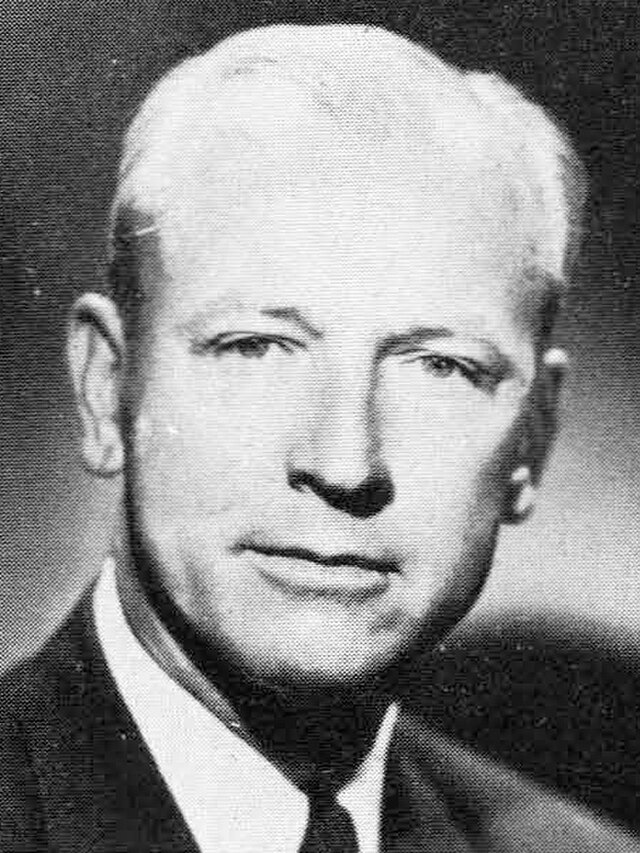
That campaign, to the keen Hawaiʻi political pundit, was Tom Coffman’s Catch a Wave. For those not familiar with this pivotal work, Coffman details the primary election between incumbent governor John Burns vs. the current Lt. Governor, Thomas Gill, who was running to become the Democratic party nominee in the 1970 election.
Burns, spending a lot of money, and as Coffman describes,
“For two weeks, the local agency had guided a Medion (mainland advertising firm) crew through some two hundred interviews covering Burns’ family friends, administrators, and political allies. In the process, the Medion crew shot twelve miles of film at sixteen millimeters, which, according to television technicians, was enough for more than thirty-six hours of viewing time.”
An image of Burns was created that both reintroduced the incumbent to the public while also redefining his image to be something more than just being governor.
As also described by Coffman, the opening of the ad campaign,
“The opening scene flashed on the governor driving over the Pali, then on the governor dedicating a space laboratory, then on Burns in his office talking into a telephone: ‘Arthur, I’ve established that some people are going over to Maui. We have troubles on Maui?” Fadeout Burns, cut to Fujio Matsuda, Burns’ transportation director: “I don’t think he’s just dreaming up a utopia that we can never achieve. He’s thinking about an achievable future for us.” Fade out Fujio Matsuda, cut on the ever-present Dan Aoki: “When you’re riding on top of a wave, you just sit on the wave. You just go…” You just go.
The wave rolled in, a brilliant blue, the epitome of beloved and idyllic Hawaii, as the Beach Boys came across in loud rock….Catch a wave.”
Note: Archival footage of the opening sequence referenced here is available through ʻUluʻulu: https://uluulu.recollectcms.com/nodes/view/47730
A lot of this imagery was reproduced, albeit in a more modern fashion, to introduce Kawakami to the state, complete with the surfing waves. Where it diverges from the Catch a Wave style is that the only person speaking in that ad is Kawakami itself. He makes remarks, emphasizing crisis leadership during floods and the pandemic. Rather than scripted campaign messaging, it relies on existing public footage to project authenticity and governing credibility.
Similar to what Burns did with Medion, there are a lot of images of Kawakami, including multiple pieces where he is speaking directly to the camera – film used from the Kauaʻi County State of the County address. As with Catch a Wave, the Kawakami/ For a Better Tomorrow ad has a simple mission – to introduce the candidate to a statewide audience, and tell everyone who they are.
And who is Derek Kawakami in these ads? It portrays him as a leader in crisis (angling toward Kauaʻi, addressing the COVID crisis) who provided steady governance. While done differently in Catch a Wave, it also portrayed the same tone, albeit with different people speaking on his behalf, until the end when Coffman described the ad closure.
“Finally, John Burns, again: “My view of my father when I was small was he was God, he was king, he could do no wrong. I’m sure he swore, but I never heard him swear. I’m sure he was as human as the next man, but he always, at least within my view, controlled himself to the point where I never saw him do anything wrong – except, perhaps, lose that Irish temper once in a while.”
John Burns, nonetheless, appeared to be human, seated on his back steps, dressed in an aloha shirt, his face muscles taut, his voice quivering in temper: “Taking a stand is anything anybody can do. The governor or chief executive of the nation is not a guy going around taking stands. That’s the way to absolve yourself of any responsibility is taking a stand…..Any damn fool can take stands.
“And I say damn fool,” his voice rising, “Any fool can take a stand.
“Does that make sense? Take a stand.”
To Catch a Wave faded in soft music, leaving the governor pruning a tree in his lawn, remarking gently to his Beatrice on the fruits and blossoms.
In comparison, for the Kawakami/ For a Better Tomorrow also has him speaking about what his vision is. Admittedly, it’s a much more unifying message, relaying a vision of one Hawaiʻi. Like Catch a Wave, the For a Better Tomorrow ad avoids policy detail in favor of presence. It asks the viewer not to evaluate a platform, but to recognize a leader already in motion.
That kind of messaging also signals a phase shift (as noted in prior articles about the issues facing the current Lt. Governor). Earlier parts have been reactive — defined by response and positioning. This ad, instead, does something different. It doesn’t engage in that back-and-forth. It moves past the current issue and looks forward.
In that sense, this begins to look like a transition into Phase 3 — where the goal is no longer to respond to the narrative, but to replace it.
Set against that shift, the similarity becomes clearer: both use the voice and image…who they are and what they’re driven to do. In essence, the Kawakami/ For a Better Tomorrow ad does not invent a new style of message that Hawaiʻi has never seen before. Instead, it tweaks it to make the candidate the main focus and character you are seeing, while Catch a Wave was more of a testimonial of the candidate, focusing back on him only at the end, with his own voice and image.
And at the end, the iconic image of the wave is still there.
The question now is whether Kawakami’s campaign will ride it — or simply follow the current that’s already been set.
Book citing:
Tom Coffman’s Catch a Wave: A Case Study of Hawaii’s New Politics (University of Hawaiʻi Press, 1973)