
This blogger has been meaning to write an article for a while: the dance between the press and the President of the United States.
PC: National Archives and Records Administration, Public domain, via Wikimedia Commons
With Donald Trump returning to the White House, and his love-hate-kinda-love-be-totally-hostile relationship with the media that covers him, this blogger has had a theory that what we are watching isn’t entirely a first-time thing.
In other words, the love-hate relationship between the President and the press did not start with Donald Trump. It goes back generations.
It is also something Politics Hawaiʻi with Stan Fichtman has been watching closely, because examining governmental power requires the ability of the press to observe, question, and report on those exercising it.
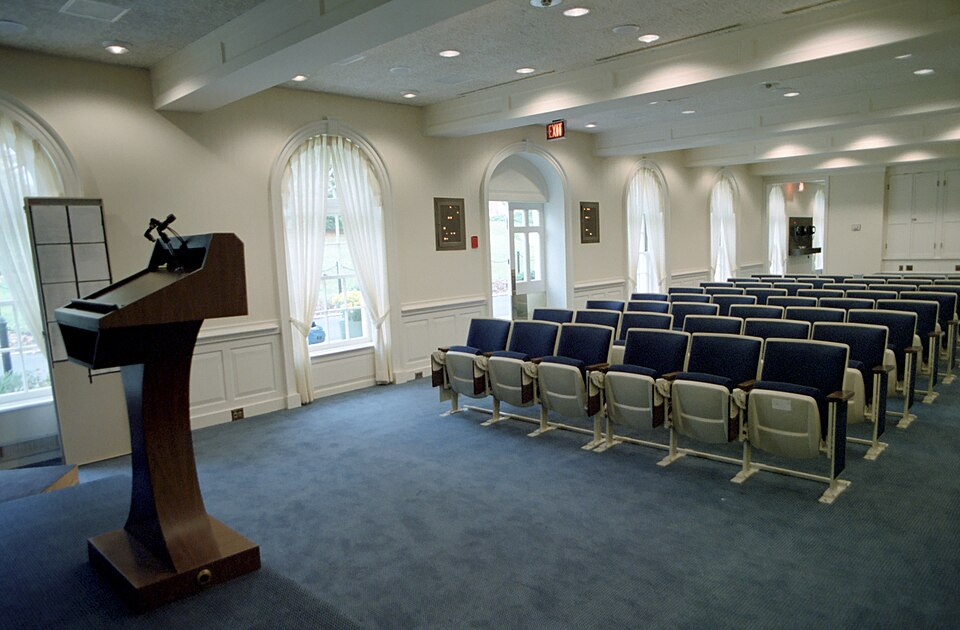
With that, this article came back to life in a very pointed way over the past week when Trump banned reporters from CNN, MS NOW and Politico from the White House.
Other major television networks responded to the ban by suspending their pooled coverage of the President; the three news organizations went to court, and a federal judge temporarily ordered their White House access restored.
Suddenly, the sometimes uneasy relationship between the White House and the press had moved from words to the White House gates and into a federal courtroom. But while the current confrontation may seem extraordinary, the underlying tension between the Presidency and the press is not entirely new.
To understand that, we need to go back nearly a century, to the presidency of Franklin Delano Roosevelt — FDR.
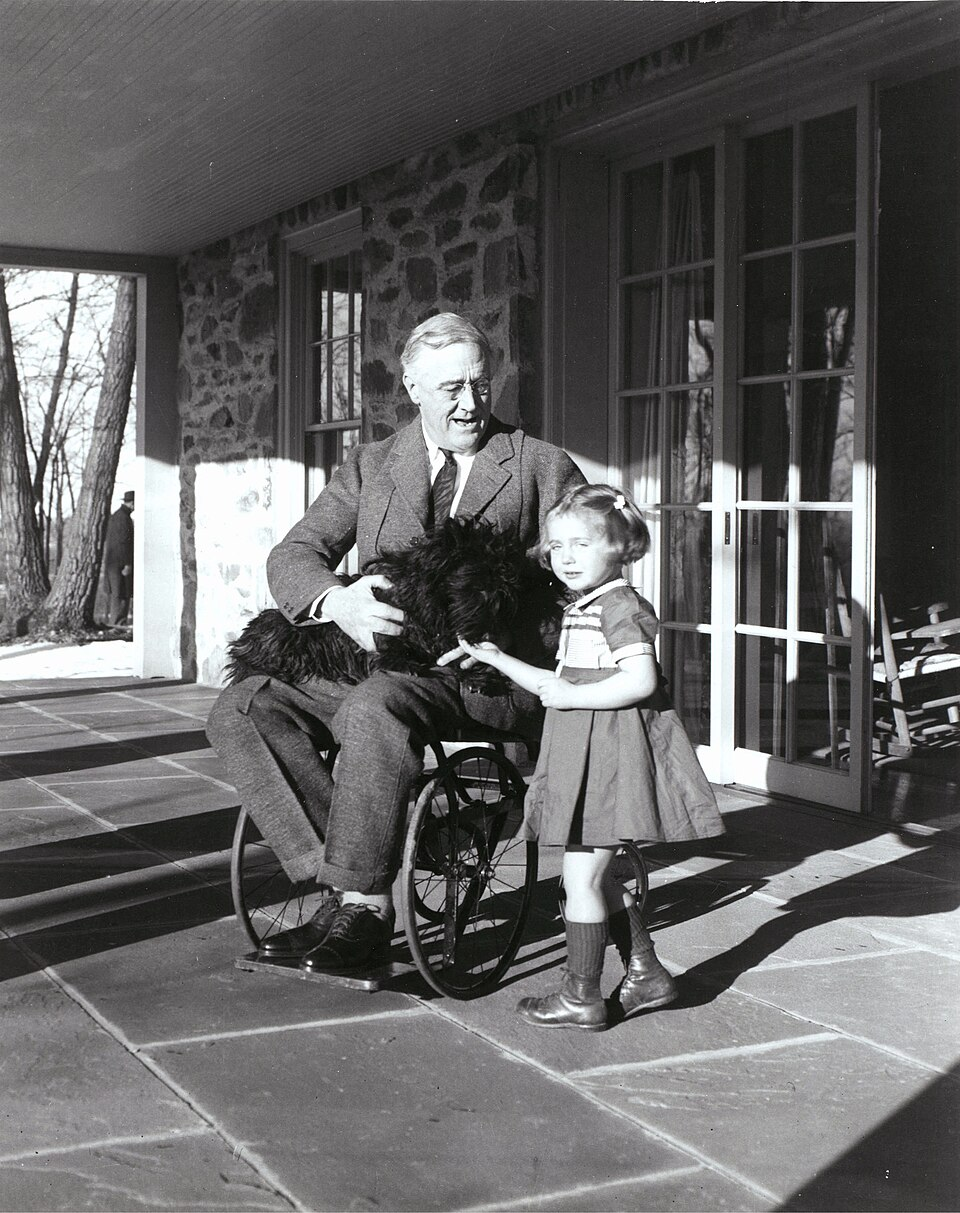
FDR had lost the ability to walk unaided after contracting polio in 1921. He relied upon a wheelchair in private and, for public appearances, leg braces, a cane, and the assistance of another person to give the appearance that he could walk. Yet Americans rarely saw that reality.
PC: National Archives and Records Administration, Public domain, via Wikimedia Commons
Roosevelt carefully managed how his disability was presented to the public. He asked photographers not to photograph him being helped from automobiles, maneuvering himself, or otherwise appearing physically dependent. The White House and Secret Service helped enforce those restrictions, while most members of the press went along with them.
There was what the FDR Presidential Library today describes as a “gentlemen’s understanding” with the press that photographs displaying Roosevelt’s disability would not be published. As a result, only a handful of candid photographs of him in his wheelchair survive.
The arrangement was a combination of White House image management and a level of deference from the press that would be almost unimaginable today. Yet, for the most part, its enforcement was informal. Journalists generally complied without being threatened with legal or regulatory punishment. And reporters were not being removed from the White House because their coverage displeased the President.
Now one can ask, “Why did the press go along with it?”
Part of the answer lies in the journalistic and social norms of the time. Disability was viewed much differently in the 1930s and 1940s, and Roosevelt had strong political reasons for wanting Americans to see him as physically capable of handling the Presidency. The press, operating under very different standards than it does today, largely accommodated him.
During World War II, concerns about national unity and security added another dimension to the relationship between the White House and the press. But the accommodation surrounding Roosevelt’s disability had begun long before the war.
Well, if we overlay the recent actions of the White House and the media with what happened in Roosevelt’s time, the words may not repeat, but there is some very distinct rhyming.
Take the war in Iran.
PC: U.S. Secretary of Defense, Public domain, via Wikimedia Commons
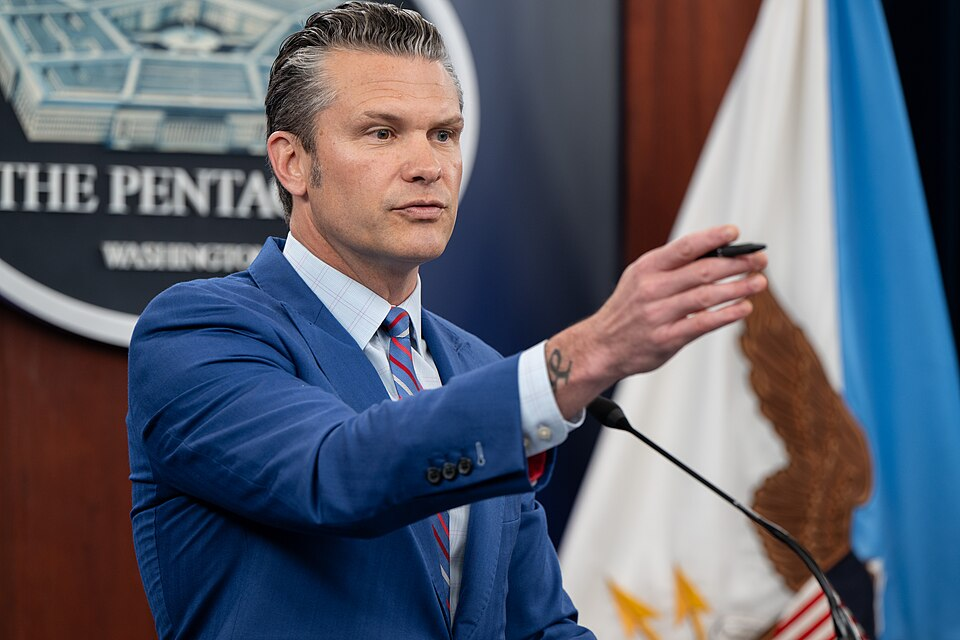
The Trump administration has pushed back against reporting that challenges its presentation of the war, including reporting about U.S. munitions and military readiness. Indeed, reporting on the Iran war was among the examples the White House cited in defending its decision to revoke the credentials of CNN, MS NOW and Politico.
We also don’t live in the 1940s. The social norms of today have changed, journalism has changed, and the press’s understanding of its responsibility to scrutinize those in power has changed with them.
So perhaps what we are watching is not an entirely new struggle between a President and the press. Instead, we are watching an old struggle recalibrated for the times in which we live.
So instead of an informal agreement over what the press would or would not cover, the relationship today has become much more direct: report the story in a way the White House finds objectionable, and access to the President may become part of the fight.
The desired outcome may rhyme with the past. The way of getting there certainly does not.
To this blogger, the old arrangement had its own problems. By agreeing not to show certain things, the press helped create an incomplete picture of the President for the American public. Going to today, the effort to control that picture is having a very different result.
Instead of compliance, it has produced resistance from other news organizations, lawsuits from those being excluded, and intervention from a federal court. Which maybe leads us to see that the struggle between the President and the press hasn’t changed as much as we think.
Maybe what has changed is that nobody agrees to the rules anymore. The gentlemen’s agreement is gone, and both the White House and the press are now fighting over who gets to set the terms.
Research Note: This article draws upon records and historical material from the Franklin D. Roosevelt Presidential Library and Museum, along with contemporary news reporting and court-related coverage concerning the current dispute between the Trump administration and CNN, MS NOW, and Politico.